

Lucky Elf casino Plinko game
Introduction
Plinko at Lucky elf casino looks almost disarmingly simple at first glance. A ball drops from the top of the board, hits a field of pegs, changes direction again and again, and finally lands in a slot with a multiplier. That is the whole visual idea. Yet in practice, this is one of those casino games that can create a very different session from what its minimalist interface suggests.
I have seen plenty of players approach Plinko expecting a light diversion, only to realise that the real appeal lies in its rhythm, its tension between control and randomness, and the way risk settings can completely reshape the experience. On a page like Lucky elf casino Plinko, the important question is not whether the board looks easy to understand. It is whether the player understands what that simplicity means once real money, variance, and repeated drops enter the picture.
For New Zealand players in particular, Plinko often stands out because it does not behave like a classic slot, a table game, or a crash title. It sits in its own lane. There are no paylines, no bonus rounds in the traditional sense, and no long rule sheet to decode. But that does not make it shallow. The opposite is often true: the fewer moving parts a game has on the surface, the more important it becomes to understand its underlying logic.
In this article, I will break down what Plinko is, how the mechanics work at Lucky elf casino, what risk levels actually change, how the pace of play feels in a real session, and where the strengths and limits of this format become obvious. The goal is practical. If you want to know whether Plinko is worth trying and what to realistically expect from it, this is the part that matters. If bonuses are what you care about, casino legality checklist breaks down every offer currently running.
What Plinko is and why it attracts so much attention
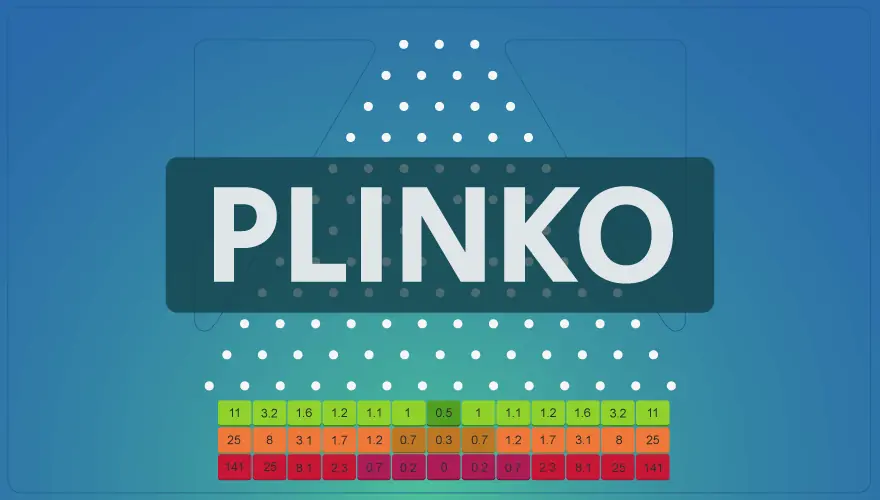
Plinko is a chance-based casino game built around a vertical board filled with pegs. The player chooses a stake, usually selects a risk level, and then drops a ball from the top. As the ball hits each peg, it bounces left or right until it reaches the bottom row, where each landing zone corresponds to a multiplier. The final multiplier determines the return on that drop.
The reason Plinko has become so visible is not just that it is easy to follow. It is that every result is visually performed in front of the player. In a slot, the outcome is determined by the spin, but the interface presents it through reels and symbols. In Plinko, the path itself becomes the show. You watch the ball travel through uncertainty in real time, and that creates a direct connection between randomness and expectation.
That visual transparency matters more than many players first assume. Even when the result is already governed by the game’s random logic, the ball’s movement gives the session a sense of suspense that feels immediate and personal. This is one of the reasons Plinko has found an audience beyond traditional slot players. It is easier to read, faster to process, and emotionally sharper in short bursts.
Another reason for its visibility is that Plinko scales well across different playing styles. A cautious player can use lower risk settings and smaller stakes to aim for steadier, lower multipliers. A more aggressive player can chase rare high-end outcomes that may not appear for long stretches. The same board can therefore produce two very different experiences, and that flexibility is a large part of its appeal.
One observation I keep returning to is this: Plinko feels honest about what it is. It does not hide behind complex themes or decorative bonus layers. It presents a simple proposition—drop, bounce, land, multiply—and leaves the tension to probability. For many players, that directness is refreshing. For a closer look at the games library, Lucky Elf Casino withdrawal times and casino rules sorts the titles by theme and pace.
How the Plinko mechanics work in practice
To understand Lucky elf casino Plinko properly, it helps to separate what the player controls from what the player only influences indirectly. In most versions, the player usually decides three things before the drop: the bet size, the level of risk, and sometimes the number of rows on the board. Once those choices are locked in, the ball is released and the rest is determined by the game’s internal random process. The full picture of payment methods lives in top Lucky Elf Casino games before depositing real money, including the less common ones.
The core logic is based on repeated directional changes. Every peg collision sends the ball one way or the other, and those tiny shifts eventually determine whether it lands near the centre or reaches the outer edges. Because of the board’s structure, central slots are statistically more common, while extreme edge slots appear less often. That distribution is crucial. The largest multipliers are typically placed at the edges precisely because they are harder to hit.
In other words, Plinko is not a game where all bottom outcomes carry equal likelihood. The board is designed around weighted distribution. Middle results occur more frequently. Extreme results are rarer. This is one of the first things a player should understand before starting, because the visual spread of multipliers can create false intuition. Seeing a huge multiplier on the edge does not mean it is a realistic target over a short session.
Risk settings then reshape the payout map. A low-risk setup usually compresses the range of multipliers. You tend to see more modest returns and fewer dramatic swings. A high-risk setup stretches the scale. That can mean more low-end landings, longer dry patches, and a much stronger dependence on rare outcomes to offset losses. The board may look similar, but the session can feel completely different.
| Game element | What it changes | What it means for the player |
|---|---|---|
| Bet size | The value of each drop | Directly affects bankroll pressure and session length |
| Risk level | The spread of multipliers | Changes how often small returns appear versus rare high multipliers |
| Rows, if available | The path length and payout structure | Can alter both the visual rhythm and the shape of possible outcomes |
| Auto-play options | The speed of repeated drops | Can make losses and gains accumulate much faster than expected |
There is also an important difference between visual randomness and mathematical randomness. The ball appears to bounce organically, almost physically, but the game is still governed by digital probability. That matters because some players start to read patterns into recent drops: left side clusters, edge hits, centre streaks. In reality, Plinko can create a powerful illusion of pattern without offering reliable predictive value. The board invites interpretation, but it does not reward superstition.
That is one of the more memorable things about this format: it often feels more “trackable” than it really is. The player sees every bounce and starts believing the path contains clues. Usually, it does not.
Why the game feels engaging and how the session tempo develops
Plinko’s engagement comes from compression. Each round is short, visually clear, and emotionally concentrated. There is no waiting for reels to stop, no need to evaluate paylines, and no pause while a bonus feature loads. A drop begins and resolves quickly, which creates a strong loop of anticipation and resolution. When the support team feels slow, VIP program guide for Lucky Elf Casino users explains the fastest ways to reach them.
At Lucky elf casino, this can make Plinko feel more immediate than many other real money games. The player gets feedback almost instantly. That speed is one of its greatest strengths, but it also changes how bankroll management works in practice. Because rounds are so short, it is easy to underestimate how many decisions are being made in a limited span of time.
The tempo becomes even more significant when players use repeated drops or autoplay. A session that feels light and casual can accelerate into a high-volume sequence very quickly. This is where Plinko differs from games that naturally slow the player down through longer animations or more layered outcomes. Here, the simplicity removes friction. That is good for clarity, but it can be dangerous for discipline.
I would describe the rhythm of Plinko as pulse-based rather than narrative-based. A slot session often has a story arc: base spins, feature triggers, bonus anticipation, then a peak. Plinko works differently. It delivers a series of compact moments. Each drop is a self-contained event. For some players, that is exactly what makes it hard to stop. For others, it can start to feel repetitive if they prefer games with evolving structure.
A second observation worth noting is that Plinko often creates stronger tension on small stakes than many slots do. That sounds counterintuitive, but it makes sense. When the whole event is reduced to a single falling ball and a visible multiplier map, every landing feels exposed. There is nowhere for the result to hide.
How risky Plinko really is and who tends to enjoy it most
Plinko can range from relatively controlled to highly aggressive depending on its settings. That makes any blanket statement about its risk profile misleading. A low-risk board with conservative stakes can behave as a manageable, fast-paced option for players who want frequent results without huge expectation. A high-risk board can become one of the more volatile experiences in the casino, especially if the player is chasing rare edge multipliers.
The main point to understand is that high upside in Plinko usually comes with long stretches of ordinary or weak outcomes. That is not a flaw in the design. It is the design. If a player enters the session expecting the top multipliers to appear with any regularity, frustration tends to arrive quickly. The game becomes much easier to evaluate once you stop treating the headline multiplier as a likely destination and start seeing it as a rare event that shapes the payout profile.
Plinko tends to suit players who enjoy direct probability-based play, short rounds, and a visible connection between event and outcome. It also appeals to those who like adjusting risk manually and seeing how the same format behaves under different settings. By contrast, players who want layered entertainment, thematic immersion, expanding features, or bonus mechanics with more texture may find it too stripped back.
It may also disappoint players who confuse activity with control. Plinko lets you choose parameters, but once the ball drops, you are not steering anything. The sensation of interaction is stronger than the actual agency. That distinction matters if you are deciding whether this format matches your style.
Plinko may suit you if: you prefer fast rounds, simple rules, adjustable risk, and a clean interface that reveals outcomes immediately.
It may not suit you if: you want story-driven slot sessions, strategic table play, or a slower pace that naturally limits the number of bets placed per minute.
What to understand about probabilities, distribution, and likely outcomes
The most useful way to read Plinko is not by asking, “Can it hit a huge multiplier?” The answer is yes, but that alone says very little. The real question is how the probability distribution is shaped and how often lower or central results are likely to appear compared with rare edge landings.
Because the board funnels many paths toward the middle, the central slots usually act as the statistical core of the game. They are not necessarily the most exciting outcomes, but they are often the outcomes that define the session. This is why a player can experience many drops, see plenty of movement, and still feel that little has materially changed. The board is active, but the return pattern may remain heavily concentrated around modest results.
That has two practical consequences. First, short sessions can be highly misleading. A player may hit a strong multiplier early and assume the format is generous, or miss everything meaningful for twenty or thirty drops and conclude the opposite. Neither impression tells the whole story. Second, raising the risk level does not simply make the game “better.” It changes the balance between frequency and magnitude. You often pay for the possibility of a standout result with a harsher baseline.
For responsible play, this means expectations should be anchored in distribution, not in isolated highlights. The most visible outcomes on the board are often the least representative ones. Plinko markets itself through contrast, but bankrolls are shaped by repetition.
| Session factor | Lower-risk approach | Higher-risk approach |
|---|---|---|
| Typical return pattern | More frequent modest multipliers | Less stable results, heavier reliance on rare hits |
| Bankroll pressure | Usually lower per sequence of drops | Can rise quickly during cold stretches |
| Emotional profile | Steadier, less dramatic | Sharper tension and bigger swings |
| Best fit | Players testing the format or managing session length | Players comfortable with extended variance |
One more point is easy to overlook: because each round resolves quickly, probability is felt as tempo, not just as math. A volatile setup does not only affect the expected spread of results. It changes the emotional speed of the session. Long misses can stack up before the player has time to reassess. That is why Plinko often feels more intense than its clean design suggests.
How Plinko differs from classic slots and other casino game formats
The clearest difference between Plinko and classic slots is structural. Slots are built around reels, symbols, paylines or ways systems, and often layered bonus events. Plinko reduces all of that to a single descent and a final landing zone. There are no symbol combinations to interpret and no reel-based suspense. The tension comes from path uncertainty rather than visual matching.
Compared with roulette, Plinko shares the idea of a single outcome determining the return, but it presents that outcome through motion rather than a wheel. Compared with crash games, it offers less player timing and more passive observation. Compared with card games, it offers virtually no strategic depth once the round begins. Its identity comes from presenting randomness in a visible, compact, almost physical form.
This has practical consequences for player expectations: Before you make a deposit, it is worth reading Lucky Elf Casino returning player bonus codes for real money players for the fee and speed details.
Plinko is easier to read than most slots. You do not need to learn a paytable full of symbols and modifiers to understand what happened.
It is less layered than feature-heavy games. If you rely on bonus rounds for excitement, Plinko may feel too bare.
It can be faster than many casino games. That increases convenience, but it also increases exposure if session limits are not clear.
At Luckyelf casino, this makes Plinko a useful contrast option for players who are tired of standard reel-based sessions. It is not a replacement for slots in every case. It is a different type of engagement. Slots often reward patience with feature cycles. Plinko rewards acceptance of immediate variance.
Practical strengths and weak points of the format
Plinko has several strengths that are easy to identify once you move past the novelty factor. The first is clarity. The player can understand the full round at a glance. The second is flexibility. Different risk settings can turn the same board into a steadier or more aggressive experience. The third is pacing. The game is efficient, and that efficiency is genuinely appealing for players who do not want long setup or explanation.
But the weak points are just as real. The simplicity that makes Plinko accessible can also make it feel thin over time. There is limited mechanical evolution during the session. If the player does not enjoy repeated probability events for their own sake, the format may lose impact quickly. Another issue is the illusion of readability. Because every bounce is visible, some players overestimate their ability to “sense” a pattern. That can lead to poor decision-making, especially when increasing stakes after a series of ordinary results. Those comparing loyalty perks can weigh this section against Trustpilot ratings overview.
There is also the issue of session speed. A game does not need complicated rules to become expensive. In fact, the opposite can be true. Plinko removes many of the natural pauses that help players reflect between rounds. That is not inherently negative, but it does mean the format demands more self-control than its casual appearance suggests.
| Strengths | Limitations |
|---|---|
| Very easy to understand from the first round | Can feel repetitive for players who want layered gameplay |
| Fast feedback and clear result visibility | Quick tempo can increase bankroll drain |
| Risk settings allow different session styles | High-risk modes can produce harsh losing stretches |
| Distinct from standard slot structure | Limited sense of progression during long sessions |
If I had to summarise the trade-off in one sentence, it would be this: Plinko offers excellent immediacy, but that immediacy comes with less cushioning. The game gets to the point quickly, and so do the results.
What to check before starting a Plinko session at Lucky elf casino
Before launching Lucky elf casino Plinko, I would focus on a few practical checks rather than jumping straight into the first drop. The first is the risk setting. Players often treat it as a cosmetic preference, but it is really the core personality switch of the game. If you choose without understanding the payout spread, you are effectively choosing your session style blind.
The second is stake discipline. Because each round resolves so quickly, even a modest bet can add up faster than expected across repeated drops. This is especially relevant if autoplay is available. It helps to decide in advance whether you are testing the format, aiming for a short controlled session, or intentionally accepting a more aggressive approach.
The third is mindset. Plinko works best when the player accepts that individual drops are not messages. They are outcomes. Chasing a “due” edge hit or increasing stakes because the board “looks ready” is usually a sign that the visual design is influencing judgement more than the math should.
If a demo version is available, it can be useful not because it predicts real-money outcomes, but because it reveals the game’s rhythm. You can quickly see whether the pace suits you, whether the low-risk and high-risk settings feel materially different, and whether the format holds your attention beyond the first few rounds.
For many players in New Zealand, that test is worthwhile. Plinko is one of those formats that can look universally appealing on screen but turn out to be quite specific in practice. Some players love its stripped-back tension. Others miss the texture of slots almost immediately.
Final verdict on Lucky elf casino Plinko
Lucky elf casino Plinko offers a very specific kind of casino experience: fast, transparent, probability-driven, and highly dependent on how the player sets risk. Its biggest strength is that it does not pretend to be more complicated than it is. You drop the ball, watch the path unfold, and get the result without delay. For players who value directness and adjustable session intensity, that is a real advantage.
What makes Plinko worth considering is not just the visual hook. It is the way a simple board can produce very different sessions depending on stake size, multiplier spread, and tolerance for variance. Low-risk play can feel controlled and easy to follow. High-risk play can become tense, swing-heavy, and unforgiving. That range is where much of the game’s practical value lies.
The caution point is equally clear. Plinko’s simplicity should not be mistaken for softness. The pace is quick, the emotional feedback is immediate, and the rare top outcomes can tempt players into unrealistic expectations. If you approach it as a clean probability game rather than a steady source of big returns, you are more likely to judge it fairly.
In the end, Plinko suits players who enjoy concise rounds, visible randomness, and the ability to tune the session style with a few settings. It is less suitable for those who want richer progression, deep strategy, or the layered entertainment of classic slots. That is why this format tends to divide opinion. For the right player, it feels sharp and refreshingly direct. For the wrong one, it can feel repetitive or too exposed. Knowing which side you are on before you start is probably the most useful insight of all.
FAQ
How does Plinko work with ball drops and multipliers?
A ball drops from the top grid, bounces between pegs, and lands in one of the outcome slots. Each slot corresponds to a multiplier that determines the result for that round. The layout and multipliers are fixed for the game session.
What risk level should be expected from Plinko, especially when choosing higher stakes?
Plinko results depend on the path of each ball, so swings can be fast. Higher stakes increase the size of both wins and losses, even though the game mechanics remain the same. Consider starting with a smaller stake for a few rounds to get a feel for the multiplier range.
Can Plinko be played in demo mode before real-money play?
Yes, demo mode is available so the ball drop experience feels familiar without using real funds. Switching to real-money play happens through the game controls on the lobby or game page. Demo results do not transfer to account balance.
A higher multiplier looks tempting, but what is the most common beginner mistake on Plinko?
People often change the stake too aggressively after seeing one unusual landing. Plinko can produce streaks in both directions, so large jumps can make the session feel unpredictable. Keeping stake changes small between rounds helps control risk.
When a bonus is active, does it affect Plinko rounds or only apply to specific game types?
Some promotions apply only to certain deposits, game categories, or bet conditions. If an active offer is eligible, the bonus terms will state how it connects to gameplay and wagering. The safest approach is to check the bonus status and rules displayed in the promo area before starting Plinko.
How can a player quickly find the exact Plinko game within the game lobby on Lucky Elf?
Use the lobby search or game categories to locate Plinko, then open the exact game card for the ball-drop session. Favorites and recently played items can also speed up returning to the same Plinko layout. Make sure the selected tile shows Plinko before starting.